
 CONFERENCE

From 1 to 31 August, Anastasiia Haidai, laboratory assistant from University of Latvia, carried out a secondment at Adam Mickiewicz University in Poznań, Poland. The secondment was focused on the MXene-antibody complexes structural characterization for further biomedical application. During the secondment, Anastasiia obtained knowledge and skills in advanced materials characterisation techniques, such as scanning electron microscopy (SEM), transmission electron microscopy (TEM) and atomic force microscopy (AFM). These methods allow to analyse MXene-antibody complexes morphology - how the antibodies attached to the nanoparticles and the thickness of the MXene's sheets with antibody layer. Secondment obtained results allowed us to understand MXene-antibody complex structure better. Moreover, Anastasiia acquired valuable knowledge and skills for further research in MXene characterisation
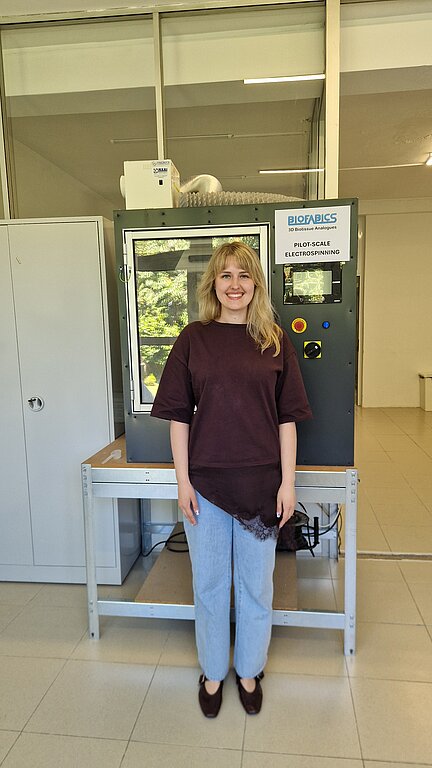
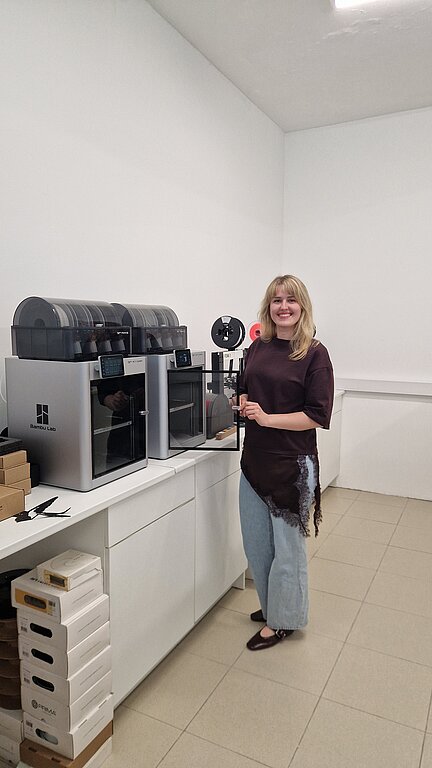
Between May 18 and June 1, 2026, University of Latvia researcher Karina Goluba completed a research secondment at BIOFABICS LDA in Portugal. This visit was conducted as part of the Horizon Europe ESCULAPE project to strengthen expertise in microfluidic technologies and their application in advanced biofabrication.
During the secondment, Karina Goluba focused on training in the design and operation of microfluidic systems, including organ-on-chip platforms and the precise control of fluid flow parameters. The work also involved the optimization and fabrication of advanced microfluidic chips with improved channel geometries and enhanced flow characteristics. In addition, the secondment explored the integration of MXene-based nanosheet scaffolds into microfluidic platforms to improve the functionality of bioengineered cell culture systems


Between March 9 and March 23, 2026, University of Latvia researchers Volodymyr Deineka and Martins Boroduskis completed a research secondment at BIOFABICS LDA in Portugal. This visit was conducted as part of the Horizon Europe ESCULAPE project to develop and test new methodologies in biofabrication and cell culture systems.
During the secondment, the researchers focused on distinct but complementary technological challenges:
• Volodymyr Deineka worked on developing a multi-channel chip system designed for the co-incubation of adherent and suspension cells.
• Martins Boroduskis focused on the extended functional evaluation of bioprinted scaffolds within a dynamic bioreactor environment. The work involved functionalising scaffold surfaces with extracellular matrix (ECM) proteins to optimize cell adhesion.
The practical outcomes of this visit include newly established protocols for cell-free prototype testing and optimized scaffold functionalization. The data and physical models generated at BIOFABICS LDA will be used directly in upcoming cell-based experiments and joint scientific publications, advancing the long-term research objectives of the ESCULAPE project.
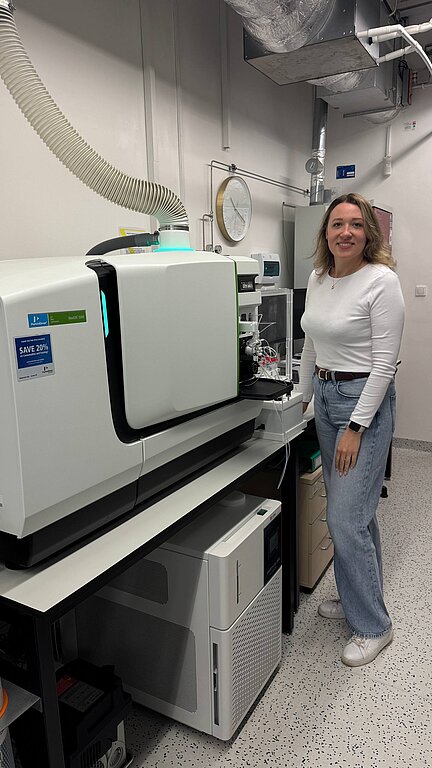
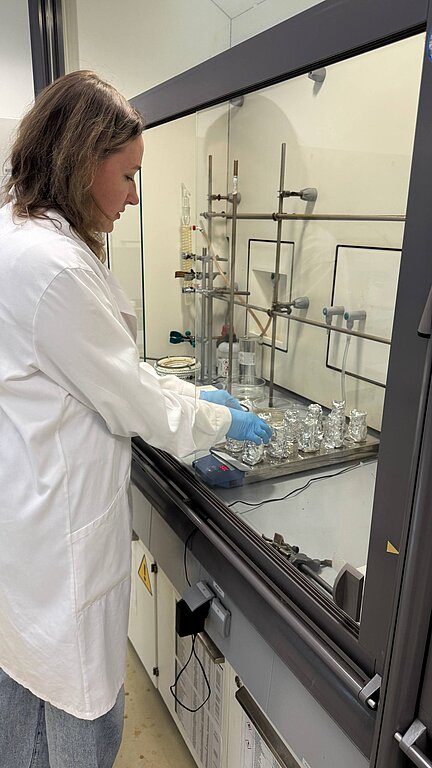
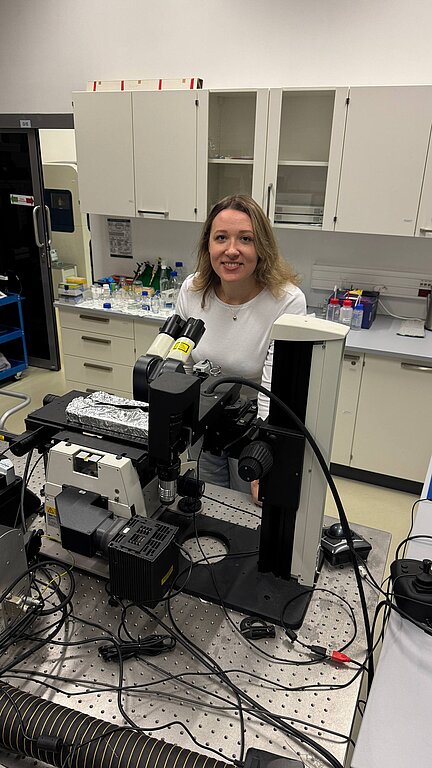
From 16 April to 15 May, Dr Kateryna Diedkova from the University of Latvia conducted a research visit at Adam Mickiewicz University in Poznań, Poland. The visit focused on the physico-chemical and structural characterization of electroconductive electrospun scaffolds with integrated MXenes for biomedical applications.
During the stay, Dr Diedkova gained hands-on training in advanced materials characterisation techniques, including atomic force microscopy (AFM) for nanoscale assessment of surface roughness, fibre architecture, and matrix phase distribution in electrospun polymer systems. She also worked with Fourier-transform infrared (FTIR) spectroscopy to analyse chemical structure, functional groups, and polymer-MXene interactions within composite scaffolds. In addition, scanning electron microscopy (SEM) was applied to evaluate fibre morphology, diameter distribution, and porosity of the electrospun materials.
The integrated analysis of structural, surface, and chemical data enabled a comprehensive assessment of the impact of MXene incorporation on the integrity and functional performance of 3D electrospun polymer membranes intended for biomedical applications
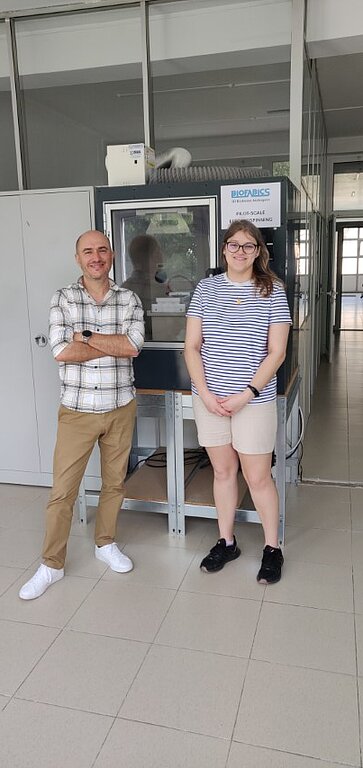
From 2026-04-08 to 2026-05-07, Silvija Juciutė, caried out a month-long secondment in Biofabics, Porto, Portugal. The main purpose of the secondment was to prepare MXenes solution and deposit it on glass substrates. During first weeks of secondment research of latest literature on MXene coating techniques was conducted. Insights from other researchers’ experience was applied for experimental work during secondment.
Firstly, experimental conditions for MXenes solutions’ preparations were determined. When MXenes solutions were prepared, they were functionalized with APTES. APTES allowed to insert functional groups in MXenes, which are required for successful coating of the glass substrate. To achieve proper coatings, functionalization process with APTES was optimized – MXenes and APTES concentrations, reaction time and temperature was determined. When functionalization was completed, I further proceeded with glass substrates coating. For coating procedure, membranes were utilised. MXenes solution was filtrated through membrane using pressure-assisted vacuum filtration. Process was optimized and desired membrane was transferred on glass substrates. Further, membrane was dissolved and MXenes layer was deposited on the surface. Prepared samples were taken back to home institution and will be further characterized and applied for biomedical purposes.
During all secondment, constant consultations and meetings with Biofabics colleagues were carried out. In addition, I participated in their internal meetings to broaden my knowledge about 3D printing technologies and microfluidic systems developments. Moreover, I attended seminars for electrospinning training. In return, I presented my experience with investigations of biomolecular interactions using optical (spectroscopic ellipsometry) and acoustic (quartz crystal microbalance with dissipation) methods
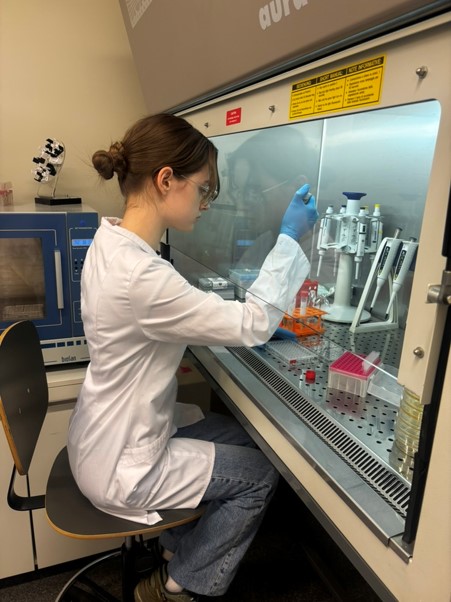
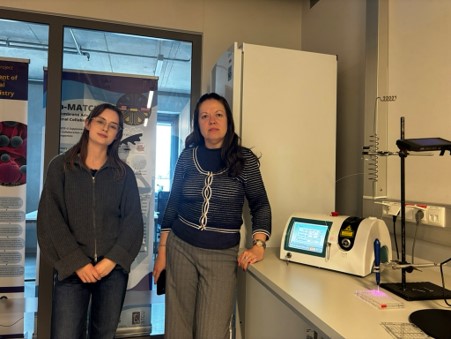
From 2026-03-16 to 2026-03-30, Kristina Sobol carried out a secondment focused on the optimization and functionalization of MXene-based bioconjugates for biomedical applications. At the initial stage of the visit, MXenes of different sizes were prepared and their synthesis parameters were optimised to obtain materials with controlled physicochemical properties. Following work involved surface modification of MXenes using polydopamine, followed by the immobilisation of antibodies to develop targeted bioconjugates. Additional efforts were dedicated to improving conjugate performance through the optimisation of blocking strategies to reduce non-specific interactions.
The prepared MXene-based bioconjugates were characterised using UV–Vis spectroscopy, surface plasmon resonance (SPR), and complementary analytical techniques.
In the later stage of the secondment, photothermal testing of the developed systems was performed, including evaluation under in vitro conditions. The visit also included participation in interdisciplinary experiments involving bacterial growth and activity assessment, as well as fluorescence microscopy analysis. The latter provided confirmation of successful antibody immobilization using fluorescently labelled secondary antibodies. The results demonstrated the potential of MXene-based bioconjugates for applications in photothermal and targeted biomedical systems
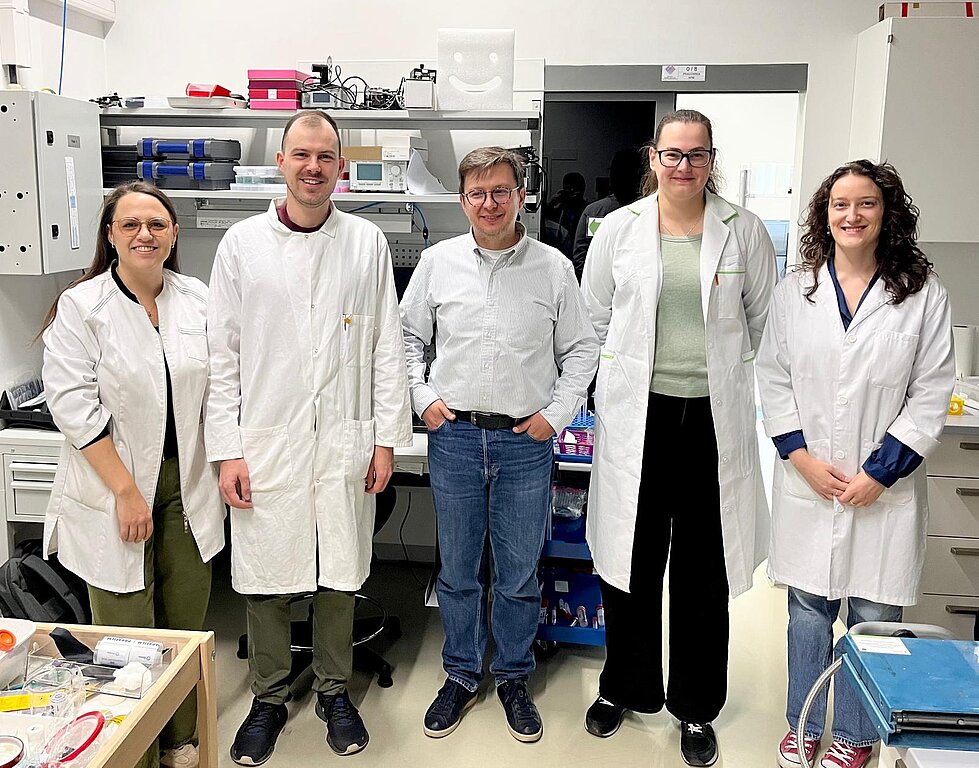
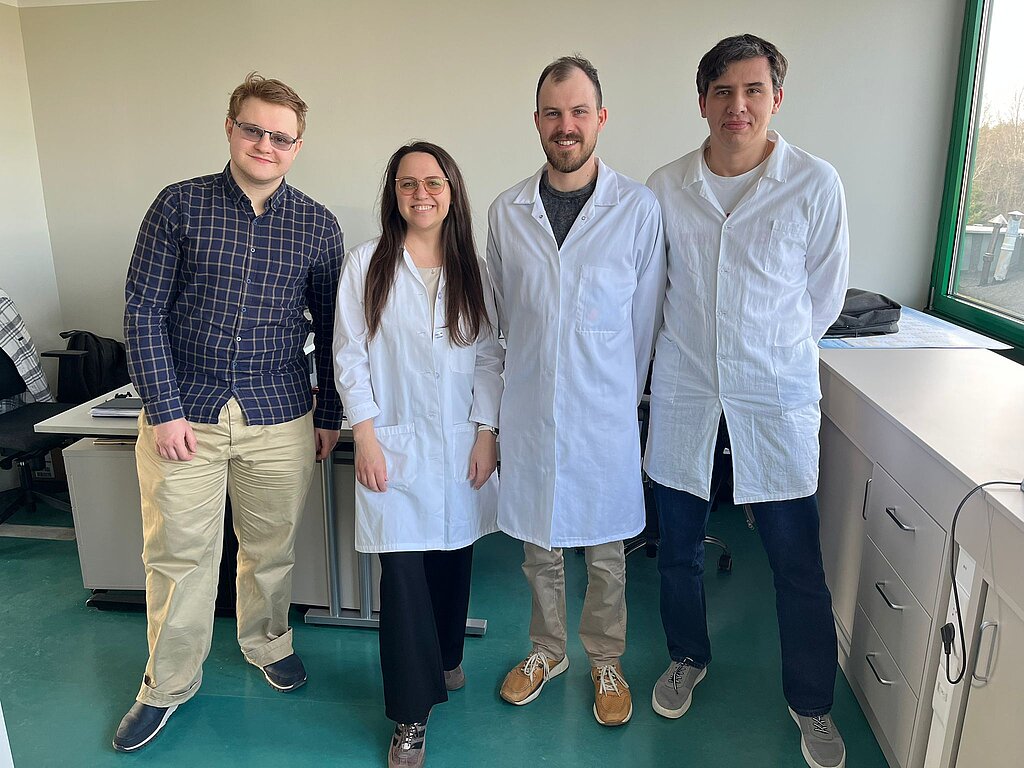

From March 3rd to 17th, 2026, Viktorija Liustrovaite visited NanoBioMedical Center, AMU in Poznan, Poland. During the secondment, work on the optimization of electrochemical characterization methods for Ti3C2Tx MXene-modified screen-printed carbon electrodes was carried out. In addition, the deposition of MXenes onto the electrode surface by drop-casting and subsequent modification with a polydopamine (PDA) layer for antibody immobilization were studied.
Electrochemical measurements were used to investigate the MXene/PDA-modified electrodes, and optimal experimental parameters were selected. Training on antibody immobilization and the development of antibody–antigen recognition interfaces for electrochemical immunosensing was carried out.
Liustrovaite gained practical experience in electrochemical techniques such as cyclic voltammetry (CV) and differential pulse voltammetry (DPV). She also contributed to knowledge exchange by introducing square wave voltammetry (SWV) and electrochemical impedance spectroscopy (EIS) for the analysis of MXene-based systems. The results obtained will be useful for further development of electrochemical immunosensors at Vilnius University
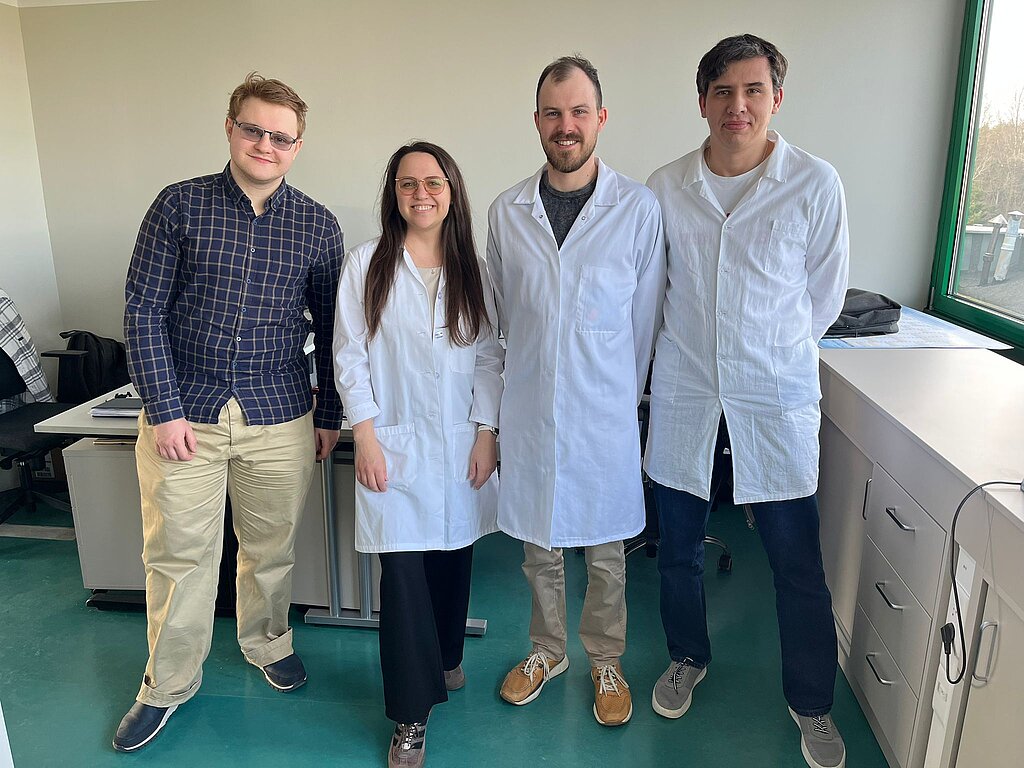
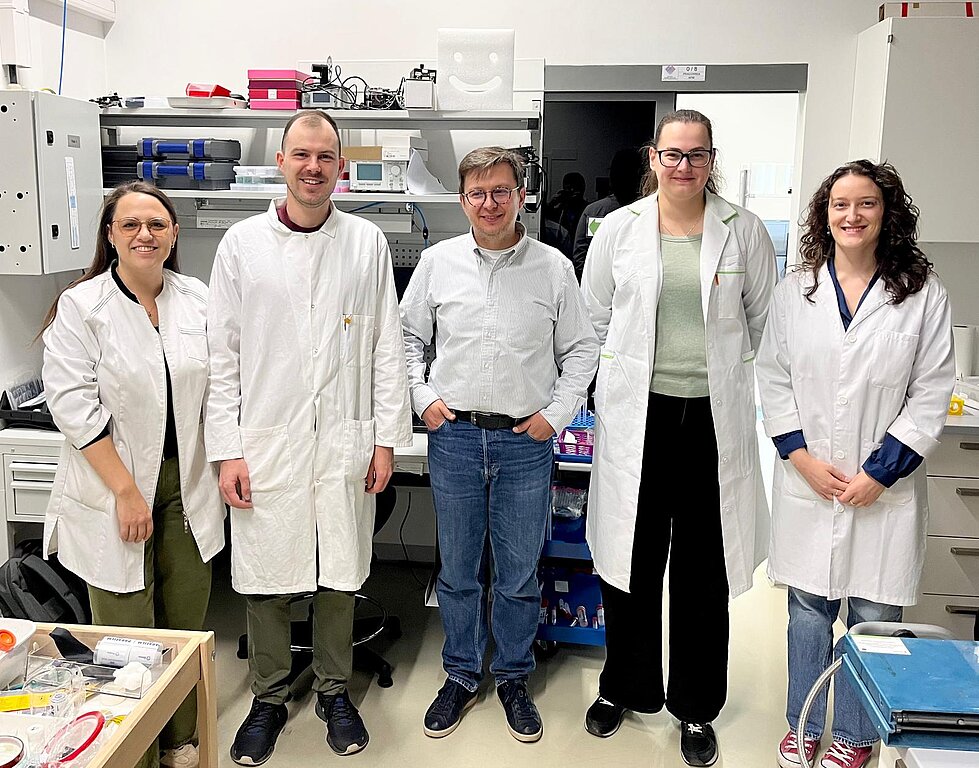
From March 3 to March 17, 2026, Dr. Benediktas Brasiūnas visited NanoBioMedical Center, AMU in Poznan, Poland.
The secondee performed research related to MXene-based materials and their integration into electrochemical sensing platforms. Activities carried out during this period included the preparation and deposition of Ti3C2TX MXenes on electrode surfaces, together with the assessment of approaches aimed at improving the stability and functional performance of the modified layers.
Throughout the visit, the dr. Benediktas Brasiūnas gained practical and scientific expertise in MXene processing, surface modification, and electrochemical characterization. The work also strengthened collaboration and knowledge exchange in the field of advanced materials for sensing applications. The results obtained provided a useful basis for optimizing modification procedures and supported the further development of MXene-based biosensing systems.


Two researchers from Adam Mickiewicz University (AMU), Andriy Lys and Irfan Hanif, carried out a secondment at RESPILON Membranes s.r.o. from 29 January to 27 February 2026. The visit was part of a collaborative effort aimed at advancing expertise in electrospinning technologies and strengthening cooperation between academic and industrial partners.
During the secondment, the research activities were focused on the development of electrospinning processes for polymer–MXene systems. The primary objective was to improve the practical aspects of membrane fabrication rather than provide basic training. Irfan worked on optimizing solution compositions and refining electrospinning parameters to achieve more uniform fibers and structurally stable membranes.
Several experimental series were conducted using large-scale electrospinning equipment at the host institution to investigate the behaviour of selected polymer–MXene compositions under continuous operation conditions. Pilot membranes were produced to evaluate process stability, fiber uniformity, and reproducibility at higher production rates. In parallel, different material formulations were compared to identify the most suitable systems for further development of functional membranes intended for large-scale production.
The secondment also enabled active knowledge exchange through daily laboratory interactions. Discussions focused on MXene dispersion, fiber formation mechanisms, and practical limitations of electrospinning processes. These interactions highlighted key differences between small-scale laboratory experiments and industrial-scale manufacturing.
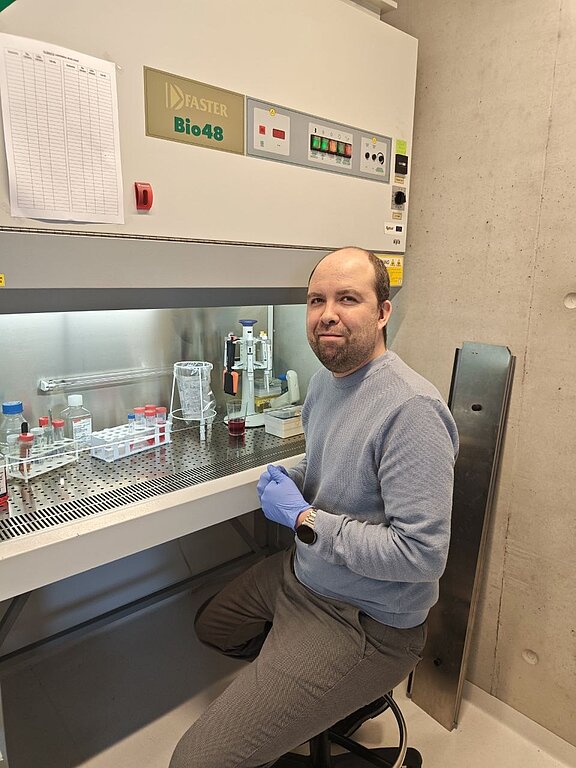
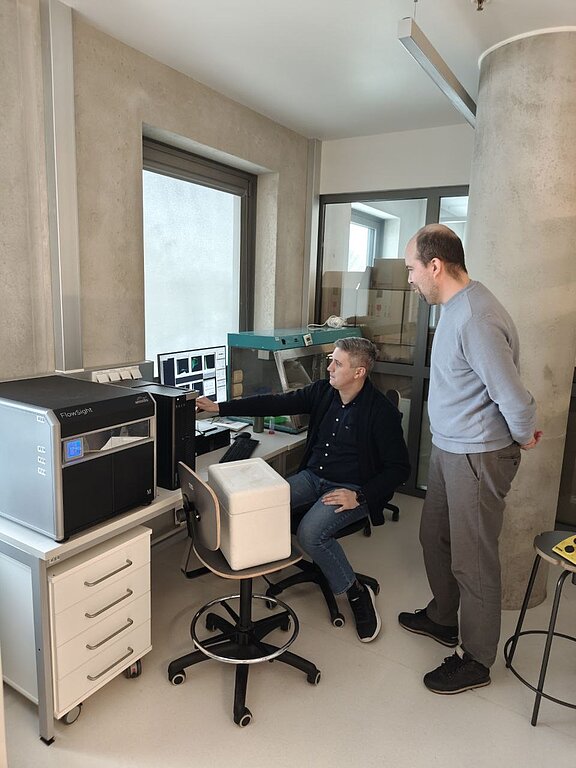
From 23 January to 22 February 2026, Anton Popov carried out a secondment focused on the development of MXene-based nanocomposites for biomedical applications. At the outset of the visit, an in-depth review of existing studies on MXenes and their deposition on polymeric membranes was conducted to identify current approaches and research gaps. Based on this analysis, a structured research strategy was established. The initial phase also included hands-on training, enabling the researcher to become familiar with laboratory equipment and experimental procedures for working with nanostructures in biomedical contexts.
Ti3C2Tx MXenes used during the secondment were synthesized at Vilnius University from the MAX phase Ti₃AlC₂ obtained from the Materials Research Center (MRC, Ukraine). The subsequent stage of the visit focused on depositing MXenes and their nanoconjugates onto polycaprolactone (PCL) nanofiber membranes. Various deposition strategies were explored to achieve uniform, stable coatings. The coated membranes were then evaluated through photothermal testing. The results demonstrated that the coating efficiency of PCL membranes depends strongly on the preparation and deposition conditions of the nanoconjugates. Furthermore, a clear relationship between the photothermal performance and the concentration and composition of the MXene-based nanocomposites was established.


Almira Ramanaviciene (Vilnius University, VU) successfully completed a secondment to Latvia University (LU) from 11 to 25 November 2025 as part of the ESCULAPE project.
During the second period of the secondment, Prof. A. Ramanaviciene was focused on the Ti3C2TxMXenes of different size preparation, characterization and comparison. The special/optimized conditions were applied to obtain smaller MXenes using the ultrasonic bath. The MXenes obtained from the project partners’ and treated by the ultrasound were characterized electrochemically using different redox mediators and various electrochemical methods. It was determined that smaller MXenes obtained after treatment in the ultrasonic bath show much higher electrochemical signal when compared with screen printed carbon electrode modified with untreated and bigger in size MXenes. The reproducibility of electrodes modified with smaller in size MXenes was evaluated electrochemically. The obtained results confirmed that the selected electrode preparation and modification with MXenes method is appropriate for the further modifications and electrochemical studies.
The secondee at the host research institution was introduced to the principles of cell culturing, adding of MXene solution, storage terms and conditions, and biocompatibility assessment principles. The knowledge she gained is very valuable for the further research with MXenes.
Sergiy Kyrylenko continued from period 1